+86- 13066013183






Industry News, 10-19-2026
The global packaging printing industry enters the second half of 2026 as a nearly half-trillion-dollar sector caught between two powerful forces: tightening European regulation on packaging waste, and an e-commerce boom that continues to pull structural design in new directions.

Market Size: From $435 Billion Toward $690 Billion

According to Global Market Insights, the global packaging printing market was valued at USD 435.7 billion in 2025 and is projected to reach USD 452.5 billion in 2026, on track to hit USD 690.6 billion by 2035 — a compound annual growth rate of roughly 4.8% over the 2026–2035 period. Mordor Intelligence gives a slightly higher 2026 estimate of USD 468.95 billion, rising to USD 685.28 billion by 2031, while The Business Research Company puts 2026 value at USD 549.48 billion after 9.2% year-on-year growth. The spread between forecasts reflects how quickly digital printing, flexible formats and e-commerce demand are expanding the addressable market rather than shrinking it.

Asia Pacific remains the largest regional block, driven by packaging production in China, Southeast Asia and India, but Europe is now setting the regulatory pace.

EU PPWR: The Rulebook Everyone Is Designing Around

The European Union's Packaging and Packaging Waste Regulation (PPWR), Regulation (EU) 2025/40, entered into force on 11 February 2025 and begins to apply across member states from 12 August 2026, replacing the older 1994 Packaging Directive. The Commission's own analysis shows why the change is urgent: without intervention, packaging waste across the EU was projected to rise by 19% by 2030, and plastic packaging waste by as much as 46%.

Existing recycling targets already require 55% of all packaging to be recycled by 2025, 65% by 2030, and 70% by 2035. PPWR adds recycled-content minimums, restrictions on unnecessary empty space inside boxes, and rules that make mixed-material laminates harder to use. Industry analysts report that the regulation has become the single largest demand driver for post-consumer recycled board, rPET and mono-material films, because converters must now secure high-quality recycled feedstock the same way they once bought virgin pulp.

The practical effect on print shops is visible on the floor: more runs on FSC-certified kraft board, more mono-layer flexible films, and fewer glossy multi-ply laminates that cannot be sorted by standard waste streams.

E-commerce Packaging Is the Fastest-Growing Pocket

If regulation is pushing the industry from the side, e-commerce is pulling it hard from the front. Mordor Intelligence estimates the global e-commerce packaging market at USD 78.39 billion in 2025, growing to USD 89.07 billion in 2026 and reaching USD 168.66 billion by 2031 — a 13.62% CAGR, nearly three times the growth rate of packaging printing as a whole.

Inside that segment, mailer boxes are the standout format. Dataintelo values the global mailer box market at USD 28.7 billion in 2025, with e-commerce taking 38.7% of revenue share; another industry tracker puts e-commerce's share of mailer box end-use even higher, at 54.45%. Corrugated board holds the largest material share at 52.3%. The shift is structural: brands no longer send a product in a plain brown carton — they design mailers that survive transit, double as a social-media unboxing moment, and can be folded flat for return shipping.

Short-Run Digital Printing Goes Mainstream

Behind both trends sits a production change. Digital inkjet printing on carton board and labels has made runs of a few hundred units economically viable, which was unthinkable on offset presses a decade ago. Seasonal campaigns, regional SKUs, limited editions and small DTC brands can now afford custom-printed packaging, forcing traditional long-run printers to compete on turnaround time and automation rather than on price per thousand sheets.

What Buyers Are Watching

Sourcing teams in 2026 are asking three questions more often than before:
- Can the board be sourced with recycled content and FSC certification?
- How quickly can a short digital run be turned around?
- Can the same box format handle both retail shelf display and parcel transit without double-packaging?

Outlook

The packaging printing industry in 2026 is no longer growing simply because more stuff is being sold. It is growing because every brand — from a 20-employee DTC startup to a global consumer-goods group — is redesigning its boxes to survive new European rules, survive courier handling, and look good on a customer's phone. For manufacturers, the prize goes to those who can combine recycled materials, short digital runs and structural design in one quote.

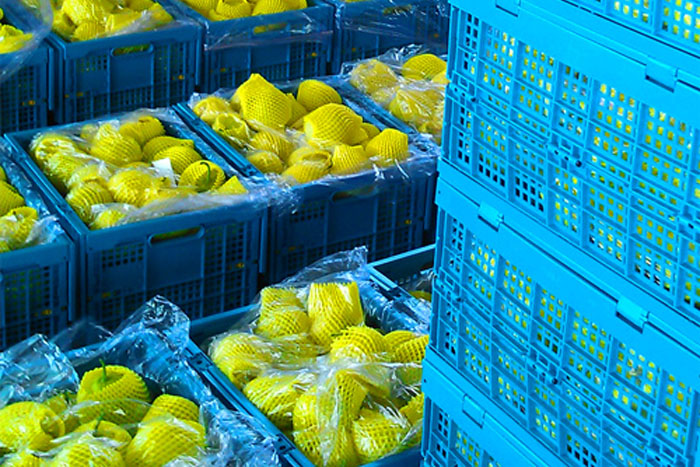
The plastic turnover box for food is generally made of PE or PP, and the product quality m
Learn more >Shandong Junchuang Intelligent Technology CO., LTD
+86-13066013183 (Nonworking Time)
Email Address: tina@sdjcznkj.com
Copyright:Shandong Junchuang Intelligent Technology CO., LTD
Key Word: plastic parts box part box divider foldable plastic warehouse box Stackable Storage Plastic Bin Box Plastic turnover box Plastic Pallet