+86- 13066013183






Industry News, 10-26-2026
The packaging printing industry is in the middle of a quiet production revolution. Digital printing — the technology that once served only labels and short marketing runs — has moved to the center of packaging manufacturing, and market forecasts show the shift is accelerating rather than slowing down.

Market Data Points to Sustained Double-Digit Growth

According to Mordor Intelligence, the global digital printing packaging market stands at USD 37.39 billion in 2026 and is forecast to reach USD 60.07 billion by 2031, a compound annual growth rate of 9.95%. The fastest-expanding pocket is flexible packaging: the digital printing segment for flexible packaging is projected to grow from USD 6.63 billion in 2026 to USD 11.58 billion by 2031 at an 11.80% CAGR, according to the same research house. Other analysts put the numbers even higher — Fact.MR estimates the digital printing for flexible packaging market at USD 10.2 billion in 2026, more than doubling to USD 24.8 billion by 2036 at a 10.0% CAGR.

For context, the broader printed flexible packaging market — which still leans on conventional flexo and gravure — was valued at USD 118.95 billion in 2025 and is projected to reach USD 125.87 billion in 2026, per Fortune Business Insights. Digital's share of that pie is still small in absolute terms but is growing far faster than the average, which is exactly what converters say they are experiencing on the shop floor.

Why Brands Are Moving to Digital

Industry sources point to three structural drivers behind the shift.

First, order sizes are shrinking. E-commerce brands and DTC labels launch seasonal products, regional editions and influencer collaborations that need print runs of a few hundred units — volumes that are uneconomical on offset or flexo presses but profitable on modern inkjet equipment. Second, turnaround time has become a competitive weapon. A digital line can move from artwork approval to finished cartons in days instead of weeks, which matters when product campaigns are built around social media moments. Third, versioning and personalization are no longer optional. QR codes, variable data, serial numbers and localized language versions all require the flexibility only digital workflows can provide.

Cost and Capacity Still Matter

The migration is not without friction. Ink cost per square meter remains higher for digital than for conventional flexo on long runs, and press speeds still trail gravure for mass production. That is why the market is splitting into two lanes: digital for short runs, versioned orders and prototyping, and conventional printing for long stable SKUs. Converters who can run both, and switch between them without requalification delays, are the ones winning new packaging contracts.

The Outlook

With the digital printing packaging market projected to nearly double by 2031, equipment suppliers, ink makers and converters all expect the production mix to keep tilting digital. For brand owners, the practical consequence is simple: minimum order quantities for custom packaging are falling, which means smaller brands can finally compete on packaging design with players ten times their size. 
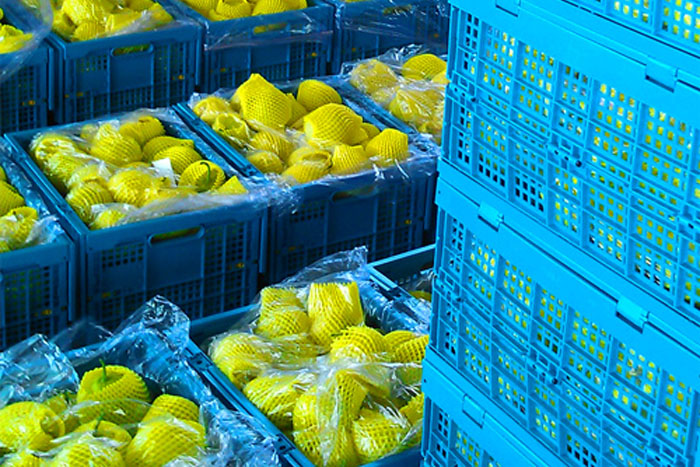
The plastic turnover box for food is generally made of PE or PP, and the product quality m
Learn more >Shandong Junchuang Intelligent Technology CO., LTD
+86-13066013183 (Nonworking Time)
Email Address: tina@sdjcznkj.com
Copyright:Shandong Junchuang Intelligent Technology CO., LTD
Key Word: plastic parts box part box divider foldable plastic warehouse box Stackable Storage Plastic Bin Box Plastic turnover box Plastic Pallet