+86- 13066013183





Industry News, 10-26-2026
Sustainable packaging has crossed a critical threshold: analysts now value the global market at more than USD 400 billion, and the numbers keep climbing as regulation, corporate commitments and consumer pressure converge on the same direction.

Market Size: Above $400 Billion and Growing 10% a Year

The Business Research Company estimates the sustainable packaging market grew from USD 401.31 billion in 2025 to USD 443.49 billion in 2026, a compound annual growth rate of 10.5%. Mordor Intelligence values it at USD 325.94 billion in 2026 with a projected USD 463.41 billion by 2031, while Fortune Business Insights puts the narrower "green packaging" category at USD 389.75 billion in 2026, rising to USD 732.33 billion by 2034 at an 8.20% CAGR. The spread in estimates reflects different definitions of what counts as "sustainable," but every major research house agrees the segment is growing faster than packaging overall.

The Regulatory Engine: EU PPWR in Full Application

The single largest force behind these numbers is the EU Packaging and Packaging Waste Regulation (PPWR, Regulation (EU) 2025/40). It entered into force on 11 February 2025, and its rules have been applying across member states in phases since 12 August 2026, replacing the 1994 Packaging Directive. The European Commission's impact analysis shows why the rewrite was necessary: without intervention, packaging waste in the EU was projected to rise by 19% by 2030, and plastic packaging waste by as much as 46%.

The regulation tightens recycling targets — 55% of all packaging recycled by 2025, 65% by 2030, and 70% by 2035 — and adds binding minimums for recycled content, limits on unnecessary empty space in boxes, and restrictions that push manufacturers away from hard-to-recycle multi-material laminates. For packaging producers and print converters serving European brands, PPWR has moved sustainability from a marketing claim to a procurement specification: recycled board, mono-material films and recyclable ink systems are now baseline requirements, not upgrades.

Paper-Based Formats Benefit Most

The regulatory shift is visibly favoring paper and board. Corrugated boxes, the workhorse of e-commerce and retail transport, were valued at USD 193.5 billion in 2025 and are projected to reach USD 203.1 billion in 2026, according to Global Market Insights, with a 4.94% CAGR taking the market to USD 313.4 billion by 2035. Corrugated's advantage under the new rules is structural: it is already one of the most recycled packaging materials in the world, with high recovery rates in mature markets and an established feedstock loop back into new boxes.

Where the Industry Is Headed

Sourcing teams now routinely ask three questions that barely existed five years ago: Is the board FSC-certified and available with recycled content? Can the structure be designed to eliminate unnecessary void space? And can a mono-material format deliver the same barrier performance as the laminate it replaces? Converters who can answer yes to all three — while keeping short-run digital capability for fast brand iteration — are positioned to capture the next cycle of packaging investment. 
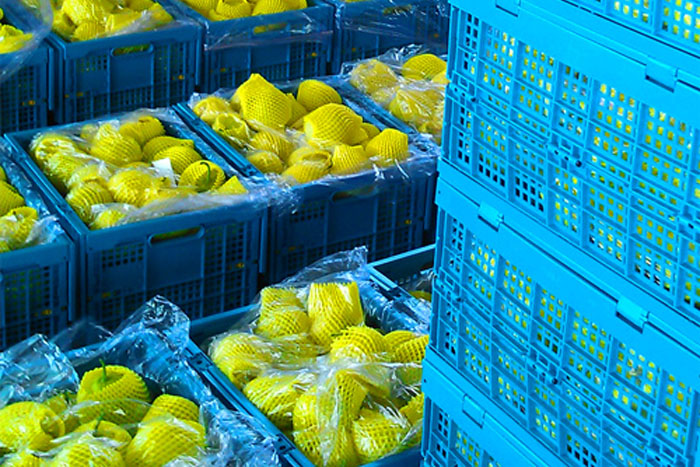
The plastic turnover box for food is generally made of PE or PP, and the product quality m
Learn more >Shandong Junchuang Intelligent Technology CO., LTD
+86-13066013183 (Nonworking Time)
Email Address: tina@sdjcznkj.com
Copyright:Shandong Junchuang Intelligent Technology CO., LTD
Key Word: plastic parts box part box divider foldable plastic warehouse box Stackable Storage Plastic Bin Box Plastic turnover box Plastic Pallet