+86- 13066013183






Industry News, 11-02-2026
Packaging used to carry a product. Increasingly, it also carries a conversation. The smart packaging market — boxes, labels and films embedded with QR codes, NFC tags, RFID chips, temperature sensors or freshness indicators — is now large enough to be a category of its own, and every major forecast agrees it is growing faster than packaging overall.

The Numbers: One Category, Two Lenses

Mordor Intelligence estimates the global smart packaging market at USD 25.84 billion in 2026, projected to reach USD 36.94 billion by 2031 at a 7.41% CAGR, with intelligent formats — driven by low-cost RFID and real-time data needs — growing fastest at a 9.23% CAGR. Using the broader definition that includes active packaging systems, Research and Markets values the market at USD 49.47 billion in 2026, heading toward USD 76.46 billion by 2032 at a 7.16% CAGR. Whichever lens is used, the growth story is the same: connected, communicating packaging is moving from pilot projects into standard procurement.

What Is Actually Being Deployed

Three technologies dominate real-world rollouts in 2026.

QR and GS1 2D codes are now the workhorse. A printed code turns any carton into a link to product registration, warranty, care instructions, loyalty programs or sustainability credentials. GS1's migration toward 2D barcodes at retail point-of-sale — with a global standard rollout timeline that brands are already planning against — is pulling massive volumes of packaging print toward code-friendly designs.

NFC and RFID add the data layer that QR alone cannot provide. NFC tags embedded in folding cartons or premium gift boxes give consumers a tap-and-connect experience at retail, while RFID labels support warehouse automation, serial-level traceability and anti-counterfeiting verification. Brands in cosmetics, pharmaceuticals and high-value electronics are the earliest heavy users, but unit costs for passive RFID tags have fallen enough that mass-market categories are beginning to follow.

Sensing packaging is the fastest-emerging niche. Time-temperature indicators on cold-chain foods, freshness indicators on perishables, and oxygen-scavenging active films are moving out of laboratories into regulated supply chains, where food-safety rules make the extra cost easier to justify.

Why Printers and Converters Are the Key Enabler

The smart packaging wave is, at its core, a printing story. Variable-data digital printing is what makes a million unique QR codes, serial numbers and localized versions economically possible on the same production line — the same digital press capacity that reshaped short-run packaging is now the infrastructure for connected packaging. For converters, the implication is that artwork files, code management and data verification become part of the manufacturing contract, not an afterthought.

Industry observers also point to a softening boundary: packaging is becoming a channel for direct-to-consumer communication, and brands are reallocating marketing budget toward the package itself, where engagement data is fully owned.

Outlook

Analysts expect smart packaging to keep compounding at roughly 7% per year through the early 2030s. The practical consequence for the packaging supply chain is that code-bearing, data-connected boxes will stop being a premium feature and become a baseline expectation — particularly in food, cosmetics and pharma, where traceability and consumer trust are already regulatory requirements. For packaging buyers, the question is no longer whether to add smart features, but which layer — printed codes, embedded tags or active sensors — fits the product's economics.

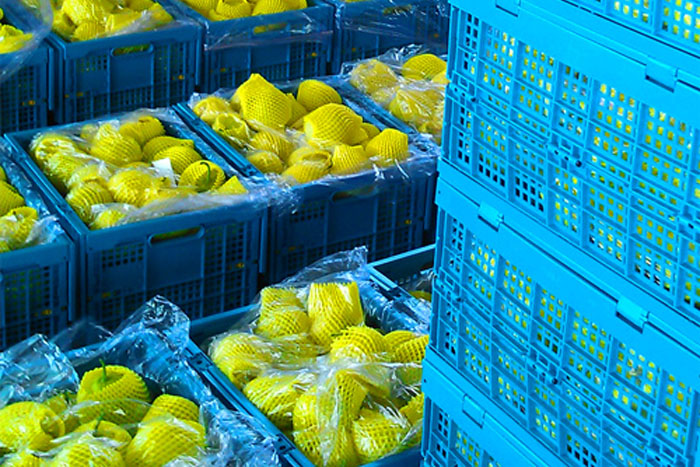
The plastic turnover box for food is generally made of PE or PP, and the product quality m
Learn more >Shandong Junchuang Intelligent Technology CO., LTD
+86-13066013183 (Nonworking Time)
Email Address: tina@sdjcznkj.com
Copyright:Shandong Junchuang Intelligent Technology CO., LTD
Key Word: plastic parts box part box divider foldable plastic warehouse box Stackable Storage Plastic Bin Box Plastic turnover box Plastic Pallet